

Virtual City casino Plinko game
Introduction
When I look at Virtual city casino Plinko, I see a format that strips casino play down to its bare essentials: one ball, one vertical board, a field of pins, and a row of prize slots at the bottom. On the surface, it is almost disarmingly simple. In practice, that simplicity is exactly why Plinko gets attention. There is no dense paytable to study, no cluster of bonus checklist symbols, and no long setup before the action starts. You choose a stake, select a risk setting, drop the ball, and watch the result unfold in seconds.
For Canadian players exploring Plinko at Virtual city casino, the appeal usually starts with accessibility. The game is easy to understand from the first round, but it does not stay shallow for long. The moment a player adjusts the risk level or changes the number of rows, the entire feel of the session can shift. That is where Plinko becomes more interesting than it first appears. Its interface looks minimal, yet the actual experience can range from calm and repetitive to highly tense and swing-heavy.
That difference between visual simplicity and real session behavior is the key to understanding Plinko properly. I would not describe it as a slot replacement in the classic sense. It is closer to a probability-driven drop game where the excitement comes from distribution, pace, and the constant contrast between frequent low multipliers and rare high-end outcomes. If a player wants to know whether Virtual city casino Plinko is worth trying, the answer depends less on hype and more on how comfortable they are with short rounds, visible randomness, and a format where the most attractive multipliers often sit at the least likely edges of the board.
What Plinko is and why players keep noticing it
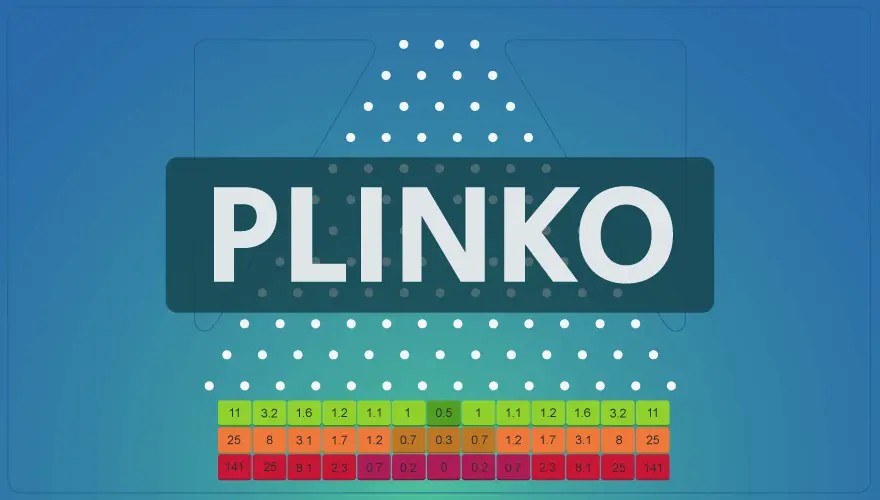
Plinko is built around a straightforward premise. A ball is released from the top of a pegged board and bounces left or right as it falls. At the bottom, it lands in a slot tied to a multiplier. That multiplier determines the return on the stake for that round. In pure structural terms, that is the whole game. Yet this stripped-back design has become one of the most noticeable formats in modern online casinos because it creates immediate suspense without requiring a long learning curve.
At Virtual city casino, Plinko stands out precisely because it does not behave like a traditional reel-based product. There are no spinning columns to decode and no expectation that a bonus round will eventually “save” a session. Every drop is the event. Every result is visible from start to finish. For many players, that level of transparency matters. You are not waiting for hidden line combinations to resolve; you are watching the path in real time, even though the underlying result is still governed by the game’s random system.
Another reason Plinko attracts attention is psychological rather than technical. The ball’s descent gives the player a visual story. Even though the outcome is random, the path creates the feeling of movement, near-misses, and possibility. A ball can drift toward a high multiplier zone, bounce away at the last moment, and still make the round feel dramatic. That is one of the most memorable things about Plinko: it turns a brief wager into a visible sequence, and that sequence often feels more personal than a standard instant result. Before you make a deposit, it is worth reading Virtual City Casino chicken road for the fee and speed details.
I also think Plinko benefits from being easy to discuss. Players can compare row settings, risk profiles, hit frequency, and multiplier ranges without getting buried in slot jargon. That makes it especially visible among users who prefer direct, mechanics-led casino games over theme-driven entertainment.
How the core Plinko system works in real play
To understand Virtual city casino Plinko, it helps to ignore the visual charm for a moment and focus on the logic underneath. The player usually controls three main variables: stake size, the number of rows, and the risk level. Once those are chosen, the ball is dropped from the top of the board. As it hits each peg, it deflects left or right until it reaches one of the bottom slots.
Those slots carry different multipliers. In most Plinko versions, the center slots tend to offer lower multipliers and appear more often, while the outer slots hold the largest multipliers but are harder to reach. This is not accidental. It reflects the natural distribution pattern of repeated left-right deflections. The center is statistically more common, while the edges are less frequent. That is why the biggest rewards are usually placed where the ball is least likely to finish.
What matters in practice is that Plinko is not just random in a vague sense. It is structured randomness. The board creates a distribution curve. The game then overlays multiplier values onto that curve. Once a player understands this, the experience becomes easier to read. Frequent modest returns are not a sign that something is wrong; they are part of how the model is designed.
Here is a simple breakdown of the main adjustable elements and what they usually mean during a session:
| Setting | What it changes | Practical effect for the player |
|---|---|---|
| Stake | The amount wagered per drop | Directly scales gains and losses without changing the underlying distribution |
| Rows | The number of pin levels on the board | Can affect multiplier spread, session feel, and the gap between common and rare outcomes |
| Risk level | The payout profile attached to the bottom slots | Changes whether the session feels steadier or more extreme |
One important observation I keep returning to is this: in Plinko, the settings do not just tweak the game; they redefine the session. A low-risk setup can feel almost methodical, with many small returns and fewer sharp shocks. A high-risk setup can make the same board feel like a completely different product, where long stretches of weak results are tolerated only because of the possibility of a rare, outsized multiplier.
Why the pace feels so different from many other casino formats
The tempo of Plinko is one of its strongest defining traits. Rounds are short. Decisions are limited. Feedback is immediate. This creates a play rhythm that can become very fast, especially for users who prefer repeated drops over slower, more layered gambling products. On Virtual city casino, that means Plinko can suit players who want a direct cycle of stake, animation, result, repeat.
But speed alone does not explain the attraction. What really shapes the rhythm is the contrast between control and surrender. The player chooses the setup, but once the ball drops, there is nothing left to influence. That creates a compact burst of tension. In a slot, anticipation often builds around reels stopping one by one or bonus symbols appearing. In Plinko, anticipation is concentrated into a falling path that lasts only a moment yet feels active from beginning to end.
This is also where some players misread the game. Because a round is brief, Plinko can look casual. In reality, its pace can accelerate bankroll swings if the player is not paying attention. Fast rounds plus high-risk settings can produce a session that burns through funds much faster than expected. The interface does not look aggressive, but the session speed can be.
A useful way to think about it is this: Plinko often feels lighter than it really is. The board looks playful. The rules are easy. The emotional pattern, however, can become intense very quickly once a player starts chasing the rare edge multipliers.
Risk levels, probabilities, and what they actually mean during a session
If there is one area players should understand before launching Virtual city casino Plinko, it is the relationship between risk level and expected session behavior. Many Plinko versions offer low, medium, and high risk. These labels sound simple, but they carry major practical consequences.
At low risk, the multiplier distribution is flatter. The top-end returns are smaller, but the board usually offers more moderate landings. This can make the session feel steadier. The player may still lose over time, but the path there is often less violent. At high risk, the distribution becomes more polarized. The board may include much larger multipliers at the extremes, but the common outcomes tend to be less forgiving. That means the player is accepting longer dry stretches in exchange for a shot at a rare spike.
Here is the practical reading of that structure:
- Low risk is generally better for players who want to observe the rhythm of Plinko without exposing themselves to sharp swings too quickly.
- Medium risk often provides the clearest picture of how the game balances frequency and upside.
- High risk is for players who knowingly accept that many rounds may underperform while a small number of outcomes carry the session’s upside.
Probability in Plinko is often misunderstood because the visuals create a seductive illusion of “almost.” A ball that bounces near a top multiplier but lands one slot away can feel like the player was close to something meaningful. Mathematically, that feeling should be treated with caution. The board is designed to produce many paths that look dramatic. Near-miss emotion does not change the actual odds of the next drop.
This is one of the most important practical truths about Plinko: every drop is independent, but the human brain reads patterns into the movement anyway. That gap between mathematics and perception is where many poor decisions start.
What a player should understand about outcomes before pressing start
Plinko is easy to launch and easy to misunderstand. Before starting a real-money session, I would focus on four points that matter more than the visual design.
- High multipliers are usually edge outcomes. They are attractive because they are rare, not because they are likely.
- Fast rounds can distort judgment. A player may place many drops in a short period without noticing how quickly the bankroll is changing.
- Changing the risk level changes the character of the game. It is not a cosmetic setting.
- Short-term results can be misleading. A few strong hits early on do not prove the setup is “hot,” and a poor stretch does not mean a big hit is due.
I would add one more observation that often separates informed players from impulsive ones: Plinko rewards emotional discipline more than strategic creativity. There is some setup choice, yes, but there is no deep tactical layer once the round begins. The real skill lies in understanding what kind of experience you are entering and setting limits accordingly.
How Plinko compares with classic slots and other casino games
Players often approach Virtual city casino Plinko expecting it to behave like a slot with a different skin. That is the wrong comparison. The better way to read Plinko is as a distinct probability-led format with a visual drop sequence instead of reels.
Classic slots usually build entertainment through symbols, paylines, bonus rounds, modifiers, and theme-driven presentation. Their engagement often comes from layered events: a base spin, then a feature trigger, then free spins information for Virtual City Casino players, then multipliers stacked inside a bonus. Plinko removes almost all of that. It offers a cleaner loop with much less narrative packaging.
The difference becomes even clearer when I compare user expectations:
| Format | Main source of tension | Typical player expectation |
|---|---|---|
| Plinko | Ball path and final landing slot | Quick results, visible randomness, adjustable session profile |
| Classic slots | Reel stops, symbol combinations, bonus triggers | Feature variety, thematic presentation, occasional extended bonus rounds |
| Roulette-style games | Single-number or section outcome | Clear odds structure and table-based betting choices |
Compared with slots, Plinko is usually easier to read but harder to romanticize. There are fewer illusions of control. Compared with roulette, it offers a more animated and visually interpretive result. Compared with crash-style products, it is less about timing and more about distribution. This in-between identity is part of why it has found a strong audience.
One memorable thing about Plinko is that it can feel more honest than a slot and more theatrical than a table game at the same time. That is not a promise of better value. It is a description of how the experience is framed.
Where Plinko delivers value and where it can disappoint
From a player’s point of view, the strengths of Plinko are clear. It is accessible, fast, visually readable, and flexible enough to support different risk appetites. A newcomer can understand the rules almost instantly. An experienced player can adjust settings and quickly test how the board behaves under different profiles. That makes the format efficient. It wastes very little time between decision and result.
There is also a practical advantage in how transparent the session feels. In many reel-based products, players can lose sight of what is driving the experience because the presentation is layered with symbols and bonus effects. In Plinko, the structure is exposed. The board, the slots, and the multipliers are right in front of you. That does not reduce the house edge, but it does make the experience easier to interpret.
Still, Plinko has limits, and they matter. The first is repetition. If a player needs variety, narrative, or evolving bonus sequences, Plinko may become monotonous faster than a slot. The second is emotional volatility. High-risk settings can create a strong chase dynamic because the rare top multipliers are always visible at the edges. The third is that the game can produce an exaggerated sense of agency. Watching the ball bounce makes the outcome feel interactive, but the result is still governed by random generation rather than player skill.
In other words, Plinko works best when it is treated as a clean probability game, not as a system to outsmart.
Who this format suits best and who may prefer something else
I would say Virtual city casino Plinko suits players who value directness. If someone likes short rounds, quick visual feedback, and the ability to adjust the tone of a session through risk settings, Plinko makes sense. It can also appeal to users who find modern slots overdesigned and would rather engage with something mechanically transparent.
It may be a poor fit for players who want long-form entertainment from each wager. If the appeal of casino play lies in story themes, expanding symbols, feature chains, or complex bonus architecture, Plinko may feel too bare. The same goes for players who are highly sensitive to streaks. Because the game can deliver many modest or weak outcomes in a row, especially on aggressive settings, patience is essential.
I would summarize the fit like this:
- Good match: players who prefer fast resolution, simple controls, and a visible probability structure.
- Mixed match: players who enjoy experimentation but may become restless if the format does not evolve.
- Poor match: players who want strategic depth, long bonus sequences, or a strong sense of thematic immersion.
A second memorable observation is worth noting here: Plinko often attracts two opposite audiences at once. Some players use it because it is simple and low-friction. Others use it because high-risk settings can create very sharp adrenaline spikes. The same board serves both groups, but not in the same way.
What to check before launching Virtual city casino Plinko
Before starting a session at Virtual city casino, I recommend treating Plinko less like a novelty and more like a format that requires clear expectations. The first thing to check is the available risk profile. Low, medium, and high settings are not minor presentation choices. They define the likely emotional shape of the session.
The second thing is stake discipline. Because rounds are short, even a modest bet can add up quickly over repeated drops. A player who would normally spend several minutes on a small number of slot spins may place far more Plinko rounds in the same time window. That changes bankroll exposure.
The third point is whether a demo mode is available. If it is, using it makes sense, not because it reveals a secret strategy, but because it helps the player feel the tempo. Plinko is one of those formats where understanding the rhythm matters almost as much as understanding the rules.
Finally, I would pay attention to personal expectations. If the goal is to chase a rare top multiplier, then the player should be honest about what that usually involves: many ordinary results and occasional frustration. If the goal is a steadier session, then a lower-risk setup is the more logical starting point.
A third observation that often gets missed is this: the most important Plinko decision usually happens before the first drop, not during the session. Once the ball is falling, the structure is already doing its work.
Final verdict
Virtual city casino Plinko offers a very specific kind of casino experience. It is not built around themes, long bonus rounds, or complicated symbol logic. Its strength lies in clarity. The player sees the board, understands the objective, adjusts the setup, and gets immediate feedback. That makes the format approachable, but not necessarily gentle. Depending on the risk level, Plinko can shift from a relatively steady drop-based session to a much harsher chase for rare edge multipliers.
What I find most compelling about Plinko is the contrast at its core. It looks simple, almost casual, yet it can produce sharply different outcomes and very different emotional responses depending on how it is configured. That is why it works for some players and fails for others. If you want a clean, fast, mechanics-first format with visible randomness and adjustable session intensity, Plinko deserves attention. If you prefer layered features, strategic decisions, or longer-form entertainment, another category may suit you better.
So, is Virtualcity casino Plinko worth trying? Yes, for the right player. Its key strengths are transparency, speed, and the ability to tailor the session profile through risk settings. Its weak points are repetition, the temptation to chase rare outcomes, and the way quick rounds can accelerate losses if discipline slips. The game does not hide what it is. That is probably its most honest quality. If a player understands that before starting, Plinko can be engaging for exactly the reasons it appears so simple.
FAQ
What does Plinko in an online casino game actually do when the ball is released?
The ball drops from the top and bounces through pegs before landing in one of the outcome slots at the bottom. Each landing position is linked to a multiplier that affects the win amount for that round. Game results are determined by the game logic behind the drop.
How does the multiplier work in Plinko, and does it depend on where the ball lands?
Yes, the multiplier is tied to the slot where the ball lands. A higher multiplier means a larger potential payout for the same stake. The risk level can feel higher during sessions with larger stakes, since the variance from one drop to the next can be noticeable.
Is Plinko available in demo mode or real-money play, and how is the difference shown?
Demo mode lets players practice the ball drop mechanics without using real-money balance. Real-money play launches the same Plinko rules but connects the round results to the active balance. The mode is shown in the game area so players know whether they are testing or wagering.
How can beginners avoid the most common Plinko mistake when they start playing real money?
Avoid jumping straight into high stakes before understanding how quickly the board outcomes change. Start with a small stake to get used to how multipliers appear only after the ball lands. Staying focused on each drop result helps prevent accidental overspending during fast sessions.
How does Plinko compare to other casino games like slots in terms of volatility and result pattern?
Plinko is built around one-drop outcomes and multipliers, so the result pattern can swing more noticeably between rounds. Slots often feel more about longer spins and symbol combinations, which can make pacing feel different. Players who prefer clear per-drop outcomes often like Plinko, while those who prefer steadier rhythms may prefer other game types.